
-
 With over 20 years of experience in human nutrition. We help you deliver better nutrition in your foods, beverages, or supplements.
 Check out our animal nutrition ingredients, designed to boost the health and vitality of all your favorite livestock.
-
 We provide tailored health solutions across various fields with independent R&D technology.
 We offer professional teams to deliver customized solutions based on your product requirements.
-
 Address common doubts and curiosities, offering clear and informative solutions. We demystify common queries and provide valuable insights in every issue!
 You can access comprehensive information to stay informed and ahead in your field. Explore and download our extensive library today!
-
 Recently, INNOBIO's LocVita® Pine-Based Vitamin D3 has officially passed the certification of the FSSAI and is permitted to enter the Indian market as a vegetarian functional nutritional ingredient.
 INNOBIO Europe B.V, the European branch of INNOBIO Co., Ltd. was launched in Rotterdam, Netherlands.
-
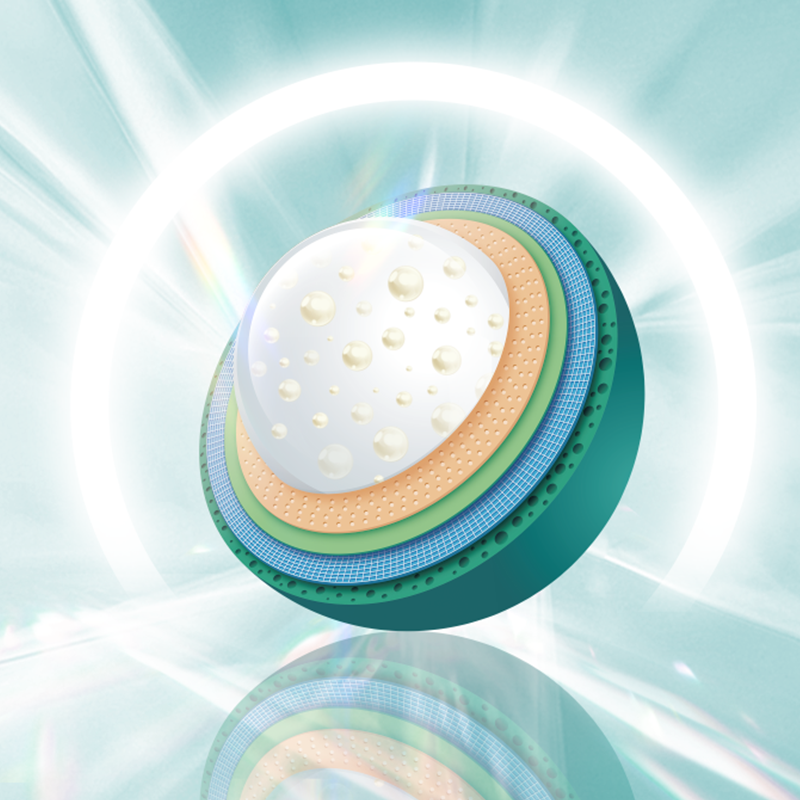 INNOBIO’s microencapsulation technology has evolved into its third generation (IMT 3.0) through iterative research of active ingredients, microencapsulating materials, equipment, and more.
 With our patented biosynthesis technology platform, INNOBIO strives to provide an alternative to chemical synthesis to provide more natural and healthy ingredients to the nutrition industry.
How Should Manufacturers Evaluate Creatine for High-Content Gummy Formulations?
A: Developing successful high-content creatine gummies requires more than selecting an ingredient with suitable basic specifications. Manufacturers should evaluate the complete relationship between active loading, product texture, processing behavior and finished-product consistency. Three areas are particularly important: formulation compatibility and active loading, sensory performance and complete-formula testing, and processing consistency and scale-up verification.
Formulation Compatibility and Active Loading
The amount of creatine used should be evaluated together with the available formulation space and the requirements of the gummy matrix. High active loading can shift the balance of gelling agents, sweeteners, moisture and other ingredients in the recipe.
Rather than focusing only on the theoretical amount of creatine that can be added, formulators should determine whether the target loading level can be maintained without negatively affecting the overall structure and consistency of the finished product. Compatibility should be checked in the full target formula, because ingredient-level specifications alone cannot predict how the matrix will perform under real recipe conditions.
Sensory Performance and Complete-Formula Testing
Mouthfeel should be assessed using the complete finished formulation, rather than evaluating the raw material in isolation. Flavor systems, sweeteners, acids and gelling ingredients can all influence the perception of texture and chewability.
Prototype testing should therefore focus on the actual consumer experience, especially for products intended for repeated daily use. Evaluation should cover roughness or grit, chewiness, flavor compatibility and overall mouthfeel across representative samples, rather than judging the ingredient on its dry physical form alone.
Processing Consistency and Scale-Up Verification
Laboratory performance does not always predict commercial manufacturing results. Mixing conditions, material flow, mold filling and depositing behavior, and batch consistency should be evaluated during pilot and scale-up trials.
A systematic validation process helps manufacturers identify processing risks early and establish more reliable production parameters before moving into full-scale manufacturing. Temperature, moisture, processing time and the characteristics of the complete gummy system should all be recorded, since each can affect how the material performs during production.
Get product quotes for free, find the right solution with our experts.
Know more about our organization and teams, join us or meet at an exhibition.
Keep connecting with us. Say it and be sorted.

All Rights Reserved © 2024 INNOBIO Corporation Limited