
-
 With over 20 years of experience in human nutrition. We help you deliver better nutrition in your foods, beverages, or supplements.
 Check out our animal nutrition ingredients, designed to boost the health and vitality of all your favorite livestock.
-
 We provide tailored health solutions across various fields with independent R&D technology.
 We offer professional teams to deliver customized solutions based on your product requirements.
-
 Address common doubts and curiosities, offering clear and informative solutions. We demystify common queries and provide valuable insights in every issue!
 You can access comprehensive information to stay informed and ahead in your field. Explore and download our extensive library today!
-
 Recently, INNOBIO's LocVita® Pine-Based Vitamin D3 has officially passed the certification of the FSSAI and is permitted to enter the Indian market as a vegetarian functional nutritional ingredient.
 INNOBIO Europe B.V, the European branch of INNOBIO Co., Ltd. was launched in Rotterdam, Netherlands.
-
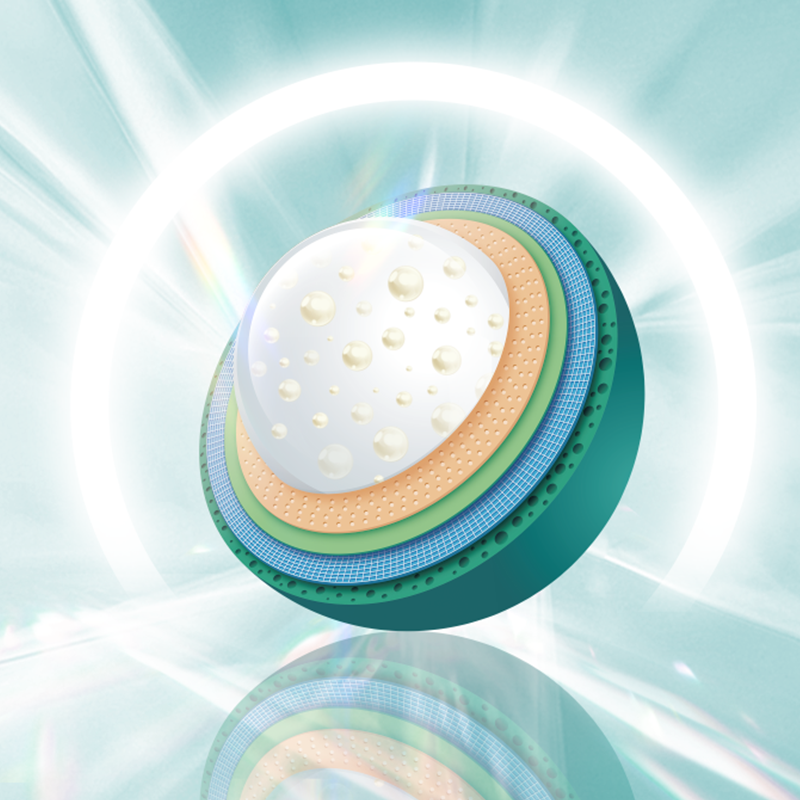 INNOBIO’s microencapsulation technology has evolved into its third generation (IMT 3.0) through iterative research of active ingredients, microencapsulating materials, equipment, and more.
 With our patented biosynthesis technology platform, INNOBIO strives to provide an alternative to chemical synthesis to provide more natural and healthy ingredients to the nutrition industry.
reatine Gummies Formulation: Solving High-Loading, Texture and Molding Challenges
多行文本内容元素
富文本内容绑定数据后可解析HTML语言内容

Formulation Challenges in High-Content Creatine Gummies
Creatine is one of the most established ingredients in sports nutrition and functional supplements, and creatine gummies have become a popular convenient dosage format. Moving creatine from conventional powders into gummy form is a simple concept, but development teams face a real formulation challenge: incorporating enough active ingredient to support the intended product position without compromising texture or processing performance.
The difficulty is not simply adding creatine to a gummy recipe. The goal is to identify an optimal formulation that delivers a sufficient dosage of the active ingredient while maintaining consistent texture and manufacturing behavior.
When the dosage of traditional creatine is raised, handling the ingredient can become problematic. High solids loading can disrupt the gummy matrix and affect the quality of the finished product. In addition, poor dispersion can lead to uneven distribution across the batch, and poorly dispersed solids can create an unpleasant sensation during chewing. These issues are interconnected: raising the active dosage without proper control of particle behavior may improve the theoretical nutritional value of the product at the expense of its quality and performance.
Beyond the active ingredient itself, formulators also need to consider whether a given creatine product fits the entire gummy system. The gel network, moisture conditions, flavor system and molding process all influence the finished product. To address these challenges, INNOBIO has developed SolCrea™ Creatine Ultra-Disperse, an ultra-disperse creatine form designed around the practical relationship between high dosage and ease of processing.
Improving Creatine Dispersion at High Loading Levels
Uniform dispersion of the active ingredient is essential in high-content creatine gummies. Without consistent distribution throughout the gummy material, texture and ingredient distribution vary from piece to piece, making uniformity and quality control difficult to achieve.
SolCrea™ is engineered for even distribution in gummy formulations while supporting high creatine levels. According to INNOBIO product data, SolCrea™ can be used in gummy formulations at levels greater than 40% without interfering with the gummy-making process. The value of this performance lies not only in the ability to reach high creatine loading, but also in the formulation flexibility it provides: developers can fit a meaningful amount of creatine into the limited active-ingredient space of a gummy recipe.
That said, high loading should always be evaluated within the full formula. Gelling agents, sweeteners, acids, flavors and other components may alter how the final product performs. Dispersion efficiency should therefore be verified in the complete formulation, not based on the ingredient alone.
Controlling Gritty Texture and Improving Mouthfeel
Texture is one of the key challenges in formulating gummies with a high creatine level. When regular creatine particles remain perceptible during chewing, the gummies take on a gritty or rough texture, and this problem becomes more pronounced as the creatine loading in the formulation increases.
Lowering the creatine concentration can reduce the gritty sensation, but it also limits the functional positioning of the finished product. A more viable approach is to improve compatibility between the active ingredient and the gummy matrix.
SolCrea™ Creatine Ultra-Disperse was developed in response to the gritty chewing experience associated with high-content creatine gummies. By modifying how creatine behaves within the gummy formulation, it enables manufacturers to maintain the required active level while delivering a more pleasant consumer experience.
Sensory evaluation note: Texture should be assessed using the complete finished formula rather than the creatine ingredient alone. Sweeteners, flavors, acids and gelling systems can all change the final perception of roughness, chewiness and overall mouthfeel.
Easy Molding Control for Pectin Gummy Production
Industrial processing adds another layer of complexity. An ingredient that performs adequately in a laboratory sample may still create difficulties during larger-scale production if it affects material flow or molding behavior.
For pectin gummy formulations, injection and molding control are particularly important. Changes in ingredient dispersion and formulation behavior can influence how the material fills the mold and whether the finished gummies maintain consistent shapes.
According to INNOBIO product data, SolCrea™ supports molding control during gummy injection in pectin formulations, contributing to better shape regularity in the finished product. Processing performance should therefore be evaluated as an important factor when selecting an ingredient, rather than considered only after active content has been assessed.
For practical formulation work, molding performance should still be verified under actual manufacturing conditions. Temperature, moisture, processing time and the characteristics of the complete gummy system can all influence final production results.
Application-Oriented Evaluation for Different Gummy Requirements
Different creatine gummy concepts place different demands on the ingredient:
High-content formulations: Active loading capacity, uniform dispersion and texture control should be evaluated together.
Pectin gummies: Molding behavior, material flow and finished-product shape regularity require particular attention.
Sensory-focused products: Gritty texture, chewability and compatibility with the flavor system should be validated through complete-formula testing.
Scale-up production: Batch consistency and processing stability should be assessed from prototype trials through commercial manufacturing.
Application-oriented evaluation of the ingredient is more reliable than judging creatine by purity or nominal active content alone. The chosen ingredient must suit the specific processing regime and sensory characteristics required by the dosage format.
Systematic Formulation Assessment and Application Support
When developing high-content creatine gummies, developers must assess several parameters beyond raw material specifications. Particle behavior, dispersion, texture, compatibility with the production process and consistency of the finished product all play a key role in determining whether a formulation can be put into practice.
A structured development approach should incorporate raw material evaluation, prototype development, compatibility verification and trial-scale validation. This approach helps identify potential problems before large-scale production and supports a better understanding of how the finished product behaves at the target creatine loading.
SolCrea™ Creatine Ultra-Disperse brings a practical creatine solution to gummy production. Its ability to address high-loading capability, smooth texture and controllable molding supports the creation of high-quality creatine gummies with optimized formulation performance.
For companies developing convenient creatine formulations, the important question is not only how much ingredient can be used. It is equally important to consider how the ingredient influences texture, distribution and manufacturability. Creatine solutions designed with these real-life formulation requirements in mind help turn high-content concepts into consistent, marketable finished products.
Related Information
reatine Gummies Formulation: Solving High-Loading, Texture and Molding Challenges
Get product quotes for free, find the right solution with our experts.
Know more about our organization and teams, join us or meet at an exhibition.
Keep connecting with us. Say it and be sorted.
All Rights Reserved © 2024 INNOBIO Corporation Limited