
-
 With over 20 years of experience in human nutrition. We help you deliver better nutrition in your foods, beverages, or supplements.
 Check out our animal nutrition ingredients, designed to boost the health and vitality of all your favorite livestock.
-
 We provide tailored health solutions across various fields with independent R&D technology.
 We offer professional teams to deliver customized solutions based on your product requirements.
-
 Address common doubts and curiosities, offering clear and informative solutions. We demystify common queries and provide valuable insights in every issue!
 You can access comprehensive information to stay informed and ahead in your field. Explore and download our extensive library today!
-
 Recently, INNOBIO's LocVita® Pine-Based Vitamin D3 has officially passed the certification of the FSSAI and is permitted to enter the Indian market as a vegetarian functional nutritional ingredient.
 INNOBIO Europe B.V, the European branch of INNOBIO Co., Ltd. was launched in Rotterdam, Netherlands.
-
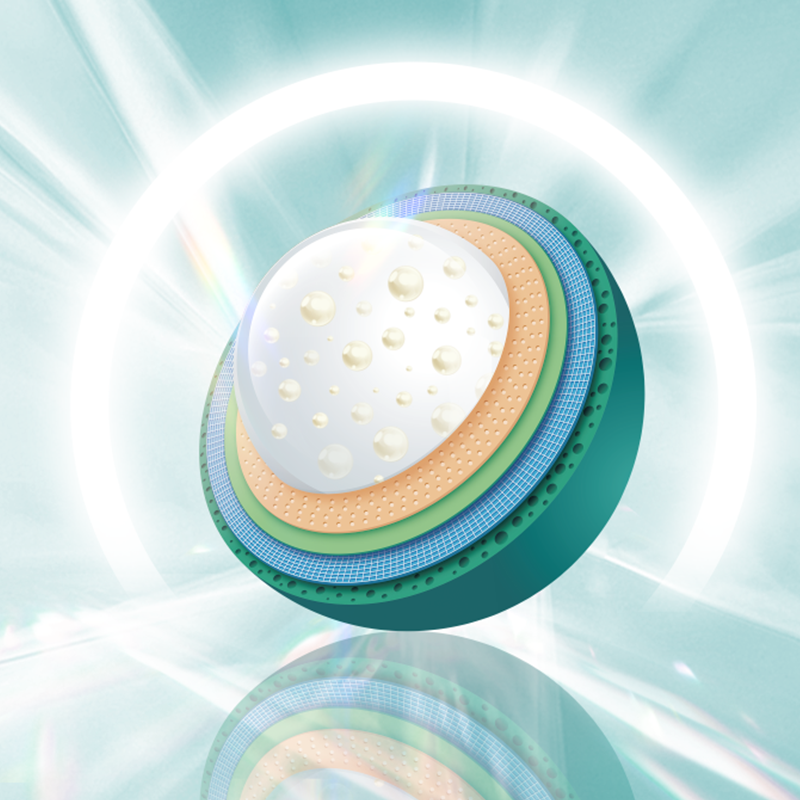 INNOBIO’s microencapsulation technology has evolved into its third generation (IMT 3.0) through iterative research of active ingredients, microencapsulating materials, equipment, and more.
 With our patented biosynthesis technology platform, INNOBIO strives to provide an alternative to chemical synthesis to provide more natural and healthy ingredients to the nutrition industry.
How Should Food Manufacturers Evaluate a Food-grade Microencapsulated Powder Supplier?
Evaluating a Food-grade Microencapsulated Powder supplier requires looking beyond price. Assess batch consistency, processing compatibility, compliance, and R&D support.
Selecting a food-grade microencapsulated powder supplier requires looking far beyond unit pricing and basic spec sheets. Because microencapsulation directly impacts release timing, shelf stability, and finished-product texture, procurement and R&D teams must evaluate ingredient consistency, processing compatibility, regulatory readiness, and technical support.
1. Batch-to-Batch Specification Consistency
The first benchmark in supplier evaluation is product uniformity. Procurement and quality assurance (QA) teams should thoroughly review Technical Data Sheets (TDS), Certificates of Analysis (COA), active core-to-wall ratios, and particle size distributions.
Consistent physical and chemical specifications prevent costly line adjustments, minimize off-spec batches, and ensure repeatable performance across ongoing commercial orders.
2. Compatibility with Existing Processing Conditions
An encapsulated ingredient that performs well on a lab bench can still fail under full-scale manufacturing stresses. Different production lines subject powders to distinct mechanical and thermal forces, including:
- High-shear dry blending or wet mixing
- Thermal processing (baking, extrusion, or pasteurization)
- High-pressure tableting or compression
- Varying ambient humidity during packaging and storage
Requesting pilot-scale samples for plant trials allows manufacturers to verify that the protective shell remains intact through existing equipment and releases the active ingredient only at the intended trigger point.
3. Regulatory Compliance and Quality Documentation
Regulatory compliance must be verified early in the sourcing process—especially when formulating for multiple export regions. Manufacturers need to confirm that both the core active ingredient and the encapsulating wall materials (such as lipids, hydrocolloids, or starches) are approved for the intended food application in all target markets.
A qualified food-grade microencapsulated powder supplier should readily provide comprehensive compliance packages—including allergen statements, non-GMO declarations, Halal/Kosher certifications, and food safety system audits (such as FSSC 22000 or BRCGS)—to streamline internal QA approvals.
4. Supply Chain Reliability and Customization Capabilities
Beyond off-the-shelf ingredients, long-term supply stability and formulation flexibility are essential for scaling product lines. Reliable raw material sourcing, transparent lead times, and responsive communication protect manufacturers against supply disruptions.
Furthermore, suppliers with dedicated R&D capabilities can customize particle size, payload concentration, or release profiles (e.g., thermal, pH, or moisture-triggered release) to solve specific formulation bottlenecks.
Get product quotes for free, find the right solution with our experts.
Know more about our organization and teams, join us or meet at an exhibition.
Keep connecting with us. Say it and be sorted.

All Rights Reserved © 2024 INNOBIO Corporation Limited