
-
 With over 20 years of experience in human nutrition. We help you deliver better nutrition in your foods, beverages, or supplements.
 Check out our animal nutrition ingredients, designed to boost the health and vitality of all your favorite livestock.
-
 We provide tailored health solutions across various fields with independent R&D technology.
 We offer professional teams to deliver customized solutions based on your product requirements.
-
 Address common doubts and curiosities, offering clear and informative solutions. We demystify common queries and provide valuable insights in every issue!
 You can access comprehensive information to stay informed and ahead in your field. Explore and download our extensive library today!
-
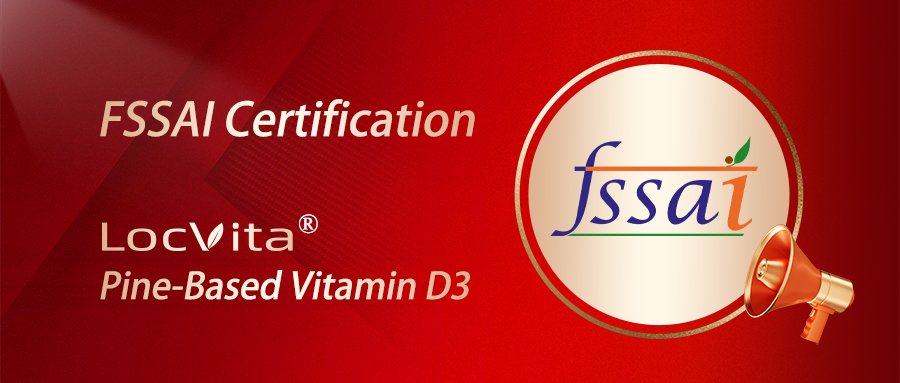 Recently, INNOBIO's LocVita® Pine-Based Vitamin D3 has officially passed the certification of the FSSAI and is permitted to enter the Indian market as a vegetarian functional nutritional ingredient.
 INNOBIO Europe B.V, the European branch of INNOBIO Co., Ltd. was launched in Rotterdam, Netherlands.
-
 INNOBIO’s microencapsulation technology has evolved into its third generation (IMT 3.0) through iterative research of active ingredients, microencapsulating materials, equipment, and more.
 With our patented biosynthesis technology platform, INNOBIO strives to provide an alternative to chemical synthesis to provide more natural and healthy ingredients to the nutrition industry.
Elevating Hydration and Endurance: Why Powdered Glycerol 50% is a Game-Changer for Pre-Workouts
多行文本内容元素
富文本内容绑定数据后可解析HTML语言内容

The Role of Glycerol in Pre-Workout Formulations
Managing hydration is a fundamental driver in sports nutrition, particularly for endurance training, prolonged athletic activity, and high-intensity sessions. Glycerol powder serves as an effective active solution for hydration-focused pre-workout supplements. As a small-molecule intermediary in carbohydrate and lipid metabolism, glycerol maintains blood glucose balance and supports sustained energy supply. When consumed with an adequate fluid volume, glycerol exerts an osmotic effect, facilitating cellular fluid retention and helping athletes maintain optimum hydration levels during strenuous workouts.
Despite its functional advantages, conventional glycerol is a viscous liquid with strong hygroscopic tendencies, making its direct incorporation into dry powder blends exceptionally challenging. Formulators and B2B manufacturers must carefully balance intended nutritional benefits (such as muscular endurance, thermoregulation, and cardiovascular efficiency) with practical blending, volumetric dosing, and industrial production parameters.
Why Powdered Glycerol 50% Matters for Formulators
When engineering a high-performance pre-workout formula, selecting a standardized powdered glycerol 50% concentration provides distinct technical advantages:
Inclusion Rate Precision: Utilizing a 50% concentration simplifies active yield calculations. Formulators can easily determine the exact raw material inclusion needed to deliver target glycerol levels while leaving ample space for other essential actives, including amino acids, electrolytes, stimulants, and flavor matrices.
Specification Verification: Raw material buyers must verify active concentration, carrier material properties, and recommended processing ranges prior to scaling recipes. The raw powder mass must not be confused with the net active glycerol yield.
Practical Raw Material Handling: Converting liquid glycerol into a spray-dried, free-flowing glycerol powder significantly streamlines raw material staging, weighing, and dry blending compared to liquid additions. However, final performance remains dependent on powder bulk density, mixing hardware, and plant humidity conditions.
Moisture Resistance and Superior Powder Flow: The GlycerBlast™ Advantage
Moisture management dictates success in dry powder manufacturing. Ingredients exposed to ambient humidity during processing or storage can absorb moisture, leading to clumping, sticky bridging, and loss of powder fluidity. These physical changes disrupt hopper feeding, continuous blending, and high-speed pouch or tub filling operations. To solve these persistent manufacturing bottlenecks, INNOBIO developed GlycerBlast™ (Powdered Glycerol 50%), featuring an innovative addition of L-leucine:
Hydrophobic Protection via L-Leucine
The hydrophobic nature of L-leucine serves as an active barrier, preventing moisture-induced clumping in the glycerol powder. Beyond physical stability, L-leucine compensates for endogenous amino acid loss, promotes muscle protein synthesis, and supports athletic endurance.
Proven Hygroscopic Stability
In stability testing (25℃, 80% RH), GlycerBlast™ remained a dry, free-flowing powder with no clumping after 3 days, whereas conventional control formulations (glycerol on silicon dioxide carriers) developed heavy caking and lost flowability completely. A smaller angle of repose further validates the superior fluidity and physical stability of GlycerBlast™ under humid storage conditions.
Robust Mechanical
ResistanceLarge-scale manufacturing subjects raw materials to intense shear stress during stirring, pneumatic conveying, and packaging. In mechanical resistance tests (150 rpm stirring at 25℃, 55% RH), GlycerBlast™ and its pre-workout blends maintained low hygroscopicity and structural stability after 24 hours without powder aggregation, outperforming standard market controls.
Supporting Consistent Pre-Workout Manufacturing
Modern pre-workout supplements combine diverse active ingredients within a single serving, ranging from botanical extracts to hygroscopic amino acids. Variations in particle size, bulk density, and hygroscopicity across ingredients can compromise final blend uniformity.
Formula Compatibility: Formulators must evaluate raw ingredient compatibility to prevent segregation or moisture transfer to flavor networks, amino acids, electrolytes, and sweeteners. Testing ensures physical stability before committing to commercial production.
Serving Calculation & Dosing: Dosing models should start from the 50% active concentration baseline. R&D teams must align active targets with flavor balance, dispersion/solubility characteristics, and total serving size constraints.
Pilot Process Validation: Running pilot-scale trial blends verifies ingredient behavior during mixing, filling, and pouch sealing. Empirical pilot data provides a far more reliable indicator of industrial success than static raw material specification sheets alone.
Application Flexibility Across Sports Nutrition Formats
While pre-workout powders remain the primary vehicle, GlycerBlast™ exhibits the mechanical durability required across multiple dosage formats:
Dosage Form | Formulation & Manufacturing Considerations |
Pre-Workout Powders | Requires strict moisture control, precise dosage accuracy, and seamless dispersion alongside stimulants and endurance actives. |
Powdered Beverages | Demands fast dispersion, stable flavor integrity, and smooth mouthfeel post-reconstitution without gritty settling. |
Hard Tablets | Demands high mechanical resistance to withstand compression forces while maintaining tablet hardness and dissolution rates. |
Capsules | Requires consistent powder bulk density and low static friction for high-speed volumetric capsule filling.
|
Quality Evaluation and Scientific Considerations
Developing a market-leading pre-workout requires more than selecting an ingredient with favorable physical properties. Brands must review technical specifications, quality documentation, regulatory compliance, and shelf-life stability across target regions.
Structure-function claims surrounding hydration, muscular endurance, thermoregulation, and cardiovascular efficiency should be evaluated thoughtfully. Physiological responses to glycerol supplementation depend on dose, total fluid intake, ambient temperature, and individual athletic conditioning. Physical processability advantages do not inherently guarantee performance outcomes; thus, finished product claims must align with supporting clinical literature and regional regulatory guidelines.
Making Powdered Glycerol Work in Next-Gen Pre-Workouts
INNOBIO’s GlycerBlast™ (Powdered Glycerol 50%) bridges the gap between liquid glycerol’s functional benefits and the practical demands of dry powder manufacturing. By combining moisture resistance, high mechanical strength, excellent powder flow, and accurate active loading, GlycerBlast™ offers a robust foundation for sports nutrition brands.
Conducting preliminary blending trials, packaging compatibility tests, and shelf-life evaluations allows brand owners to verify how GlycerBlast™ can elevate their pre-workout portfolio. Contact the global INNOBIO team today to request samples, technical data, and custom formulation guidance.
PREVIOUS:
Related Information
Elevating Hydration and Endurance: Why Powdered Glycerol 50% is a Game-Changer for Pre-Workouts
Get product quotes for free, find the right solution with our experts.
Know more about our organization and teams, join us or meet at an exhibition.
Keep connecting with us. Say it and be sorted.
All Rights Reserved © 2024 INNOBIO Corporation Limited